Schizophrenia (SZ) and bipolar disorder (BD) are two related psychiatric conditions that together contribute significantly to the global burden of disease. SZ is defined primarily by the presence of psychotic symptoms, and is also characterized by dysfunctional affective responses and altered cognition. BD presents with episodic swings in mood, potentially ranging from extreme mania to severe depression, and is often accompanied by psychotic symptoms and impaired cognition. This overlap between the symptoms of SZ and BD, which can be classified together as 'major psychosis', suggests there may be etiological factors common to both disorders.
Studying epigenetic changes associated with both SZ and BD is a major research focus in our lab. Current studies include the analysis of 1) monozygotic twins discordant for psychosis, 2) post-mortem brain tissue from affected patients and matched controls, and 3) an integrated genetic-epigenetic analysis using ~5000 clinical samples and controls included in ongoing GWAS analyses.
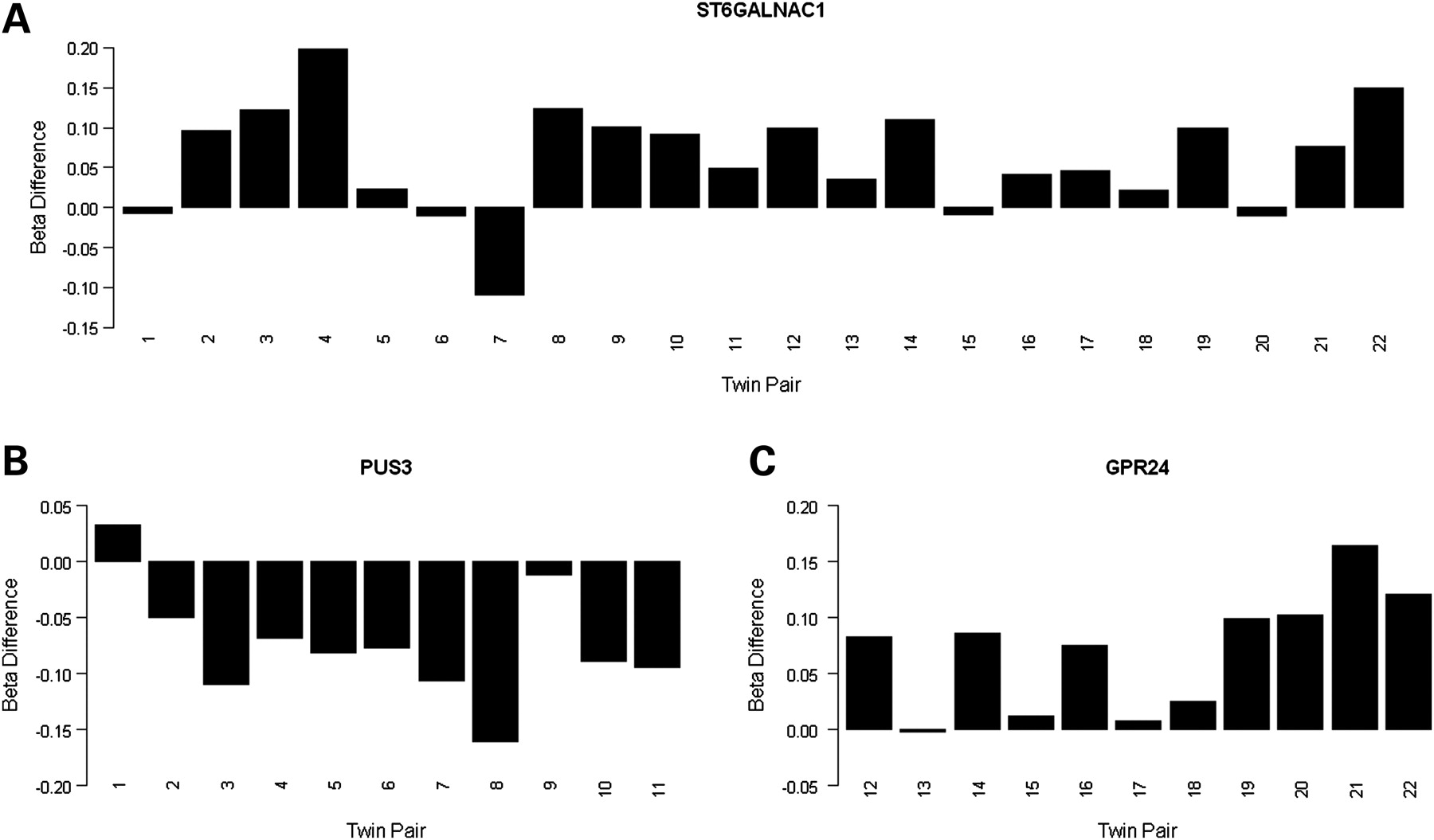
DNA methylation differences (Δβ-value) (well-twin minus ill-twin) assessed using the Illumina 27K methylation array for the top-ranked probes from (A) the combined psychosis-discordant analysis group: ST6GALNAC1 (cg13015534), (B) SZ-discordant analysis group: PUS3 (cg02659232) and (C) the BD-discordant analysis group: GPR24 (cg21342728). Psychosis = twin pairs 1-22, SZ = twin pairs 1-11, BD = twin pairs 12-22.